Close
Close

“After a relatively slow start to the year with severe frosts, ice and snow in January and February, the beginning of the spring season in March was also patchy. This was followed by a strong April, but May was extremely unsettled and fell short of our expectations. June began well, but the heatwave in the latter half of the month dampened trading once again. To achieve the same turnover as last year despite this volatility is a real success and a testament to the strength of Veiling Rhein-Maas, our sales channels, our offering and our logistics.”
Commercial performance
May opened strongly for the cut flower auction, supported by Mother’s Day demand. However, sales were subsequently disrupted by extreme weather swings ranging from unseasonably low temperatures to record highs, presenting growers with major challenges. Initially, supplies were limited by the cool, dark conditions. As the weather improved, volumes of crops like peonies and gerberas increased, but by then soaring temperatures meant sales failed to keep pace. In June, supplies of cut flowers fell below last year’s levels, with many growers deciding not to harvest entire plantings of Helianthus, for example, due to poor sales during the extreme heat. However, both sales and demand picked up to good, stable levels during the cooler period between early and mid-June.
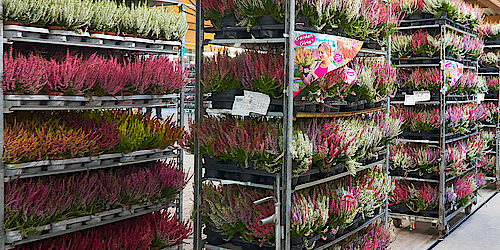
In the plant segment, the cold winter seems to have prompted many consumers to skip spring planting altogether in the mild April weather, moving straight to summer planting. This led to a far more muted May – usually the peak month of Veiling Rhein-Maas’s high season. June got off to a promising start, with product values clearly exceeding those seen in the same period last year. Large perennials sold strongly, and bedding plants were also in demand. However, the heatwave in the second half of the month again had a significant impact on plant sales.
Clock Service sales of cut flowers exceeded expectations slightly, although market pressures remain evident, particularly for imported roses. Increases in transport costs have also played a role in this. By contrast, the positive trend for house and garden plants continues, with mixed arrangements maintaining their popularity across both segments.
“One clear feature of the recent spring season was that there were very few major supply peaks,” Esser and Hoekstra explained. “This resulted in a steadier flow across both trading and logistics. The fact that we started the spring season two weeks earlier than usual helped too. Even so, the ever more frequent and unpredictable changes in weather are making both supply volume and sales planning increasingly difficult.”
IT landscape modernisation
Since the start of this year, Veiling Rhein-Maas has been working on the SOT Re-factoring project, which involves migrating the current SOT software to a new programming language. This platform underpins the operation of the auction clocks, logistics and related processes. The remote buying app, which lets customers purchase in real time from home, is not based on the SOT system but is also being upgraded. In all of this, the focus is on enhancing system reliability and competitiveness. The project remains on track and is scheduled for completion in summer 2027.
Trade fair activity
In early June, Veiling Rhein-Maas attended IFTEX, Africa’s leading flower and plant trade fair in Nairobi, Kenya, where our representative met with suppliers and made new connections with growers. This year’s event set a new record with 210 exhibitors, highlighting Africa’s growing significance as a flower producing and exporting region.
African cut flowers will once again be in the spotlight during Veiling Rhein-Maas’s second African Week, from 12 to 14 October. Following its highly successful debut in 2025, which featured a vibrant foyer, lively discussions with customers and suppliers and valuable insights into the African cut flower sector, this October Veiling Rhein-Maas’s foyer will again be dedicated to showcasing Africa’s floral industry and international partnerships.